An industrial LED luminaire passes through eight manufacturing stages before it ships: incoming material inspection, SMT chip mounting, die-casting and machining of the housing, surface treatment, luminaire assembly, burn-in aging, final inspection, and packing. Where a factory cuts corners in that chain determines whether a fixture honestly delivers its rated 50,000-hour life — or fails in year two. This article walks through each stage with photos taken on our own production floor in Changzhou, so you can see what a real manufacturing chain looks like and know exactly what to ask any supplier to show you.
Key Takeaways
- The eight stages are: incoming QC → SMT → die-casting/machining → surface treatment → assembly → aging → final inspection → packing. Every stage has a check that catches a specific failure mode.
- The two stages buyers should scrutinize hardest are SMT (solder quality decides thermal transfer from the chip) and aging (burn-in racks catch early-life failures before they become warranty claims).
- A factory that owns its SMT line and die-casting can control quality at the source; a trading company can only inspect the finished box.
- Ask for stage evidence, not promises: IQC records, solder-paste inspection data, LM-79 photometric reports, and aging logs.
Why the Process Matters More Than the Datasheet
Two fixtures can share an identical specification sheet — same SMD LED package, same driver brand, same IP rating — and behave completely differently after two summers on a factory ceiling. The difference is rarely in the components; it is in how they were put together. A cold solder joint under a LED chip adds thermal resistance that no datasheet records. A housing cast with too much recycled aluminum conducts heat measurably worse. A gasket seated by an untrained hand passes the day-one inspection and lets moisture in by month six.
That is why serious buyers audit the process, not the paperwork. The eight stages below are the chain we run at Sunjoylight — founded in 1999, operating from an integrated facility in Changzhou, Jiangsu — and they map to the chain any legitimate LED manufacturer should be able to walk you through, in person or on a video call.
Stage 1 — Incoming Material Inspection (IQC)
Everything starts at the receiving dock. LED chips are checked against their binning codes so that color and flux stay consistent across a production run — mixed bins are how a warehouse ceiling ends up visibly patchy. LED drivers are sampled for output current, power factor and surge components. Aluminum ingots and profiles are verified for alloy grade, because thermal conductivity depends on it. Tempered and borosilicate glass is checked for stress marks and dimensional fit.
The failure this stage prevents: counterfeit or downgraded components entering the chain. It is far cheaper to reject a reel of chips at the dock than to scrap a thousand assembled boards.
Stage 2 — SMT: Mounting LEDs on the Board
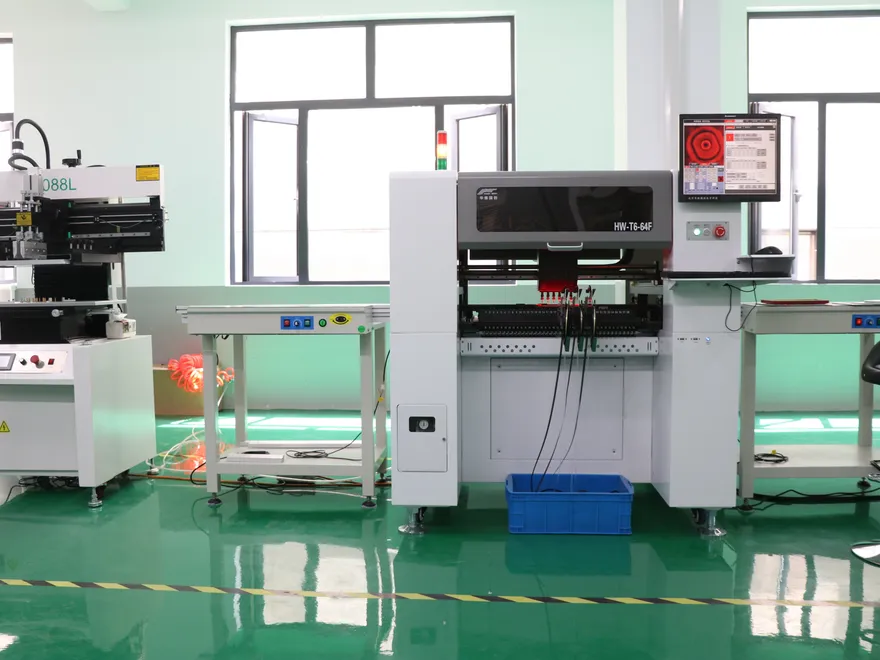
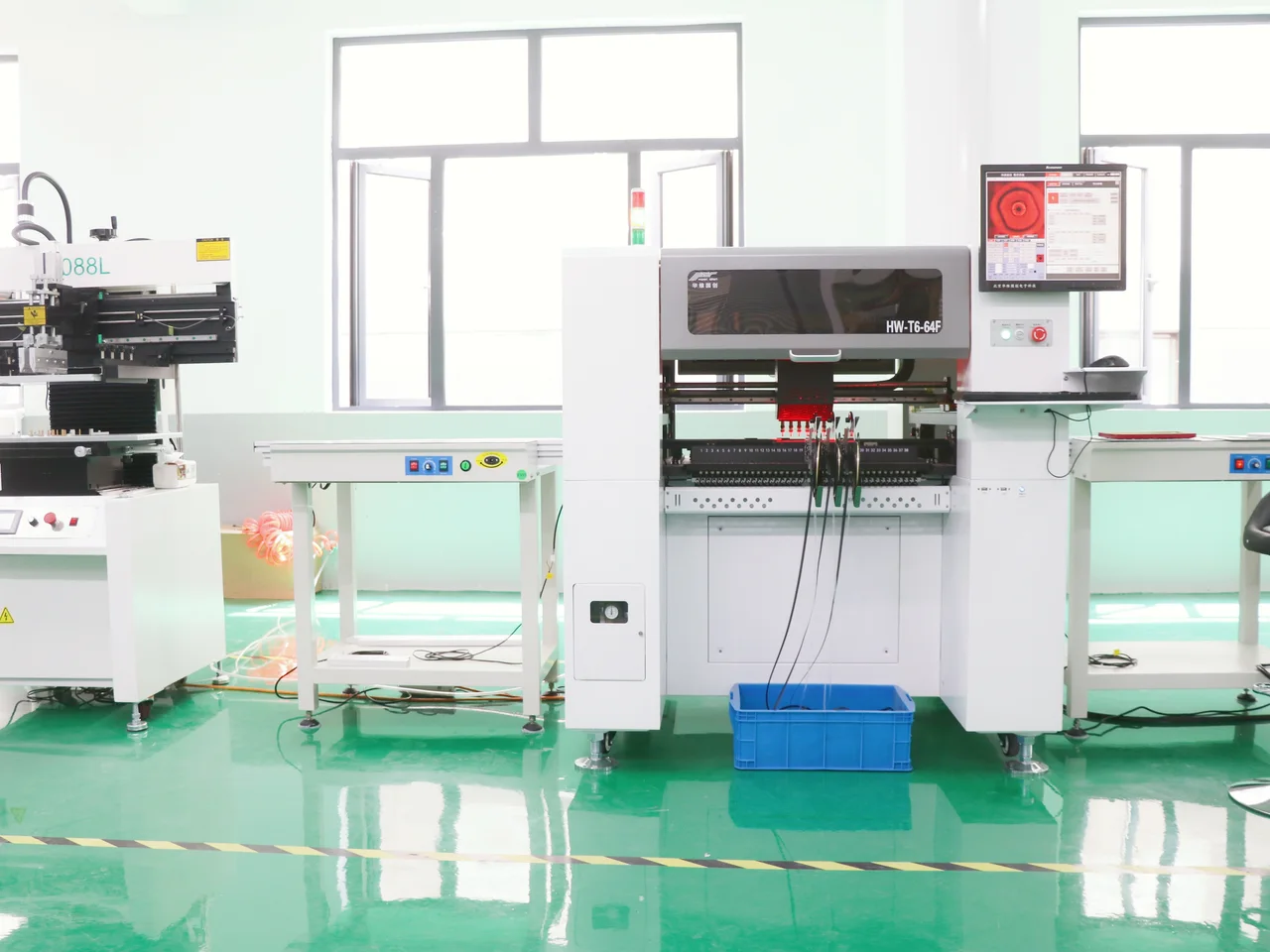
Surface-mount technology (SMT) is the heart of LED manufacturing. Solder paste is stenciled onto an aluminum-substrate PCB, a pick-and-place machine sets each chip — we mount Lumileds 3030 packages across most product families — and the board travels through a reflow oven whose temperature profile melts the paste into uniform joints.
Why buyers should care: the solder joint under a LED is not just an electrical connection, it is the thermal path. Heat leaves the chip through that joint into the aluminum board and onward to the heat sink. A void or cold joint raises junction temperature, and junction temperature is the single biggest driver of lumen depreciation. Good factories run solder-paste inspection and post-reflow optical inspection on every panel; ask to see that data.
Stage 3 — Die-Casting and Machining the Housing
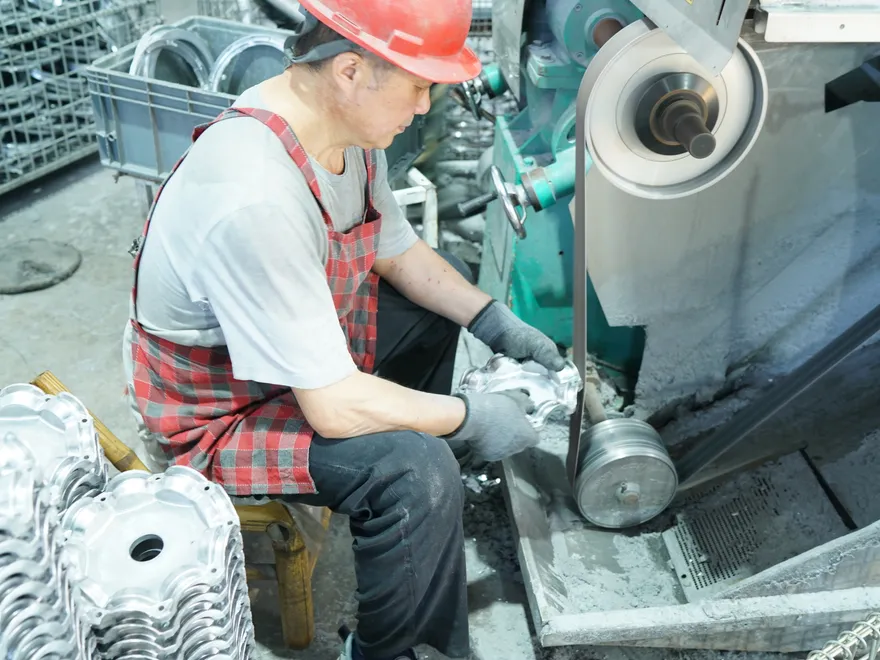
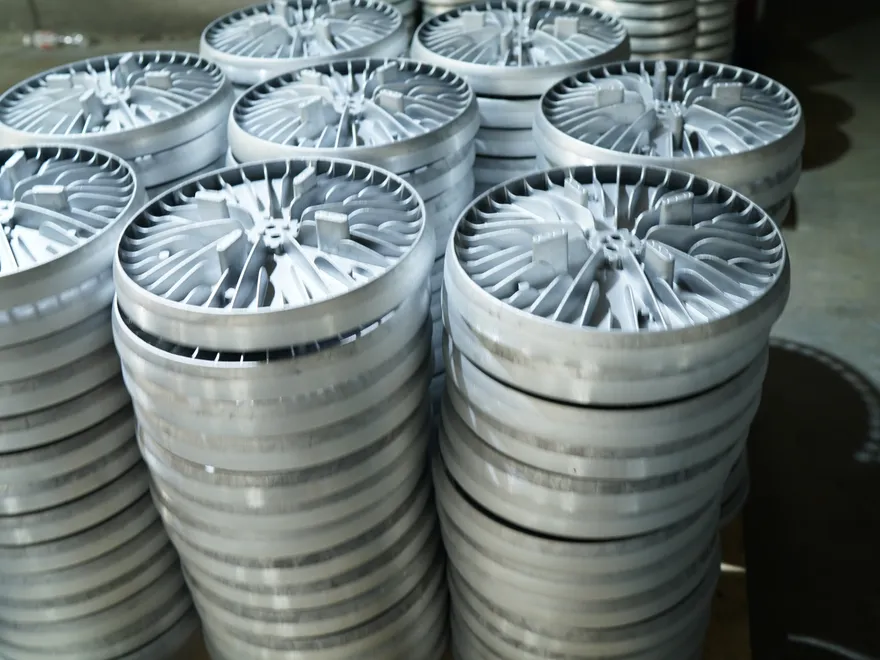
The die-cast aluminum housing is cast under high pressure, then trimmed, deburred, and machined flat where the LED board and gasket will seat. Two things decide quality here. First, mold condition: a worn mold produces porous castings with hidden voids that weaken the housing and block heat flow. Second, flatness of the mounting surface: the LED board must sit in full contact with the housing, or the thermal path breaks exactly where it matters most.
For explosion-proof fixtures this stage carries extra weight — the flameproof joints of an Ex d enclosure are machined surfaces whose gap tolerances are defined by GB/T 3836, and they are only as good as the casting and machining behind them.
Stage 4 — Surface Treatment and Powder Coating
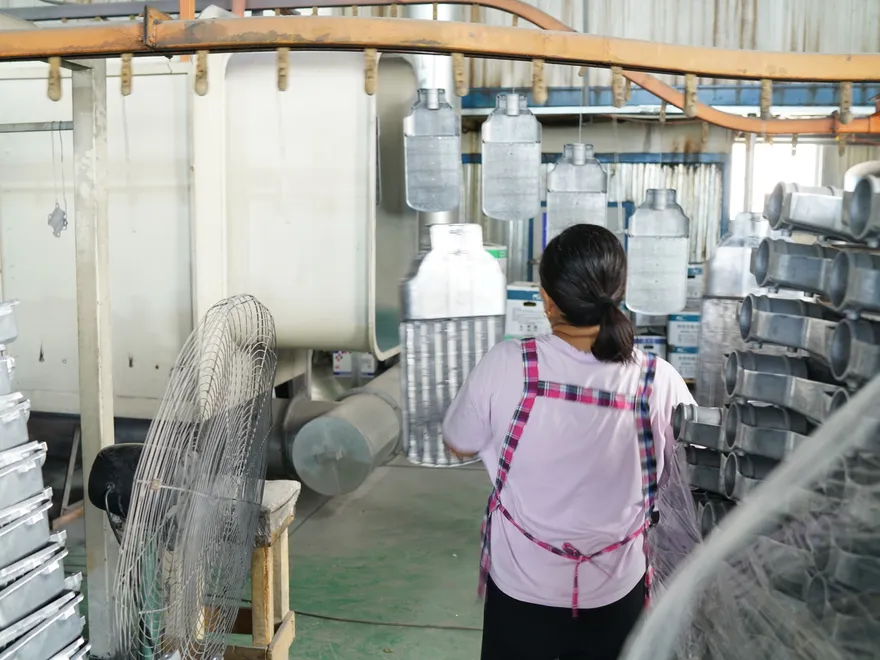
Raw aluminum corrodes in salt air and chemical atmospheres, so every housing is surface-treated — typically electrostatic powder coating over a cleaned and pre-treated casting. Coating thickness and adhesion are what stand between the fixture and a coastal or chemical-plant environment; we validate finishes in a salt-spray chamber on site. For fixtures headed to marine or process industries, exposed fasteners are specified in 304 stainless steel so the corrosion story does not end at the paint.
Stage 5 — Luminaire Assembly
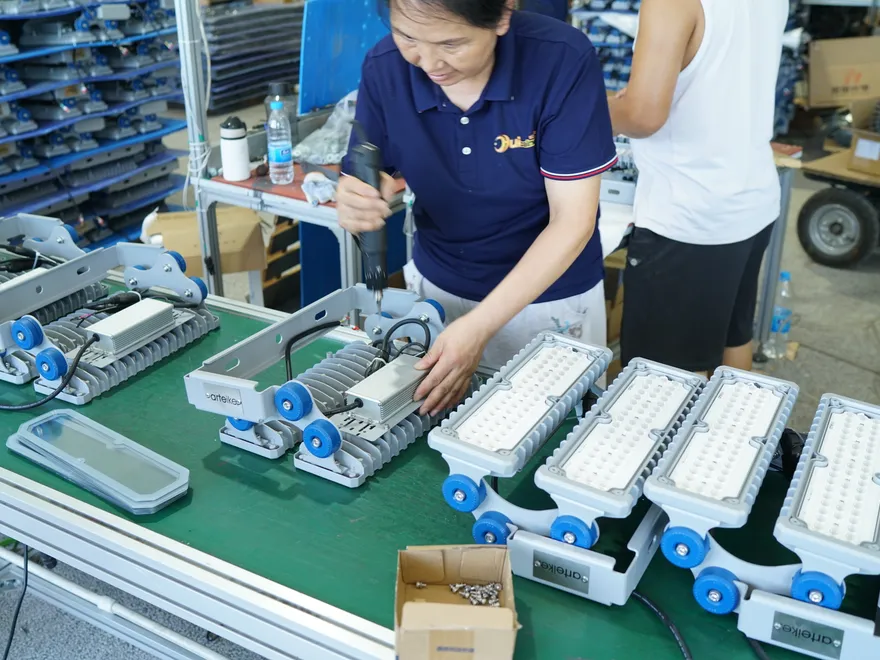
Assembly is where the fixture becomes a fixture: thermal interface material between board and housing, driver wiring and strain relief, silicone gasket seating, lens or tempered-glass installation, and torque-controlled fastening. Most field failures blamed on “bad LEDs” are actually assembly failures — a pinched wire, a twisted gasket, a lens seated off-center. Disciplined lines fight this with work instructions at every station, torque-marked fasteners, and in-process checks rather than a single inspection at the end.
Every fixture receives a safety test at this point: hi-pot (dielectric withstand), ground continuity, and insulation resistance — the checks behind the CE and CCC safety requirements.
Stage 6 — Aging and Burn-In Testing
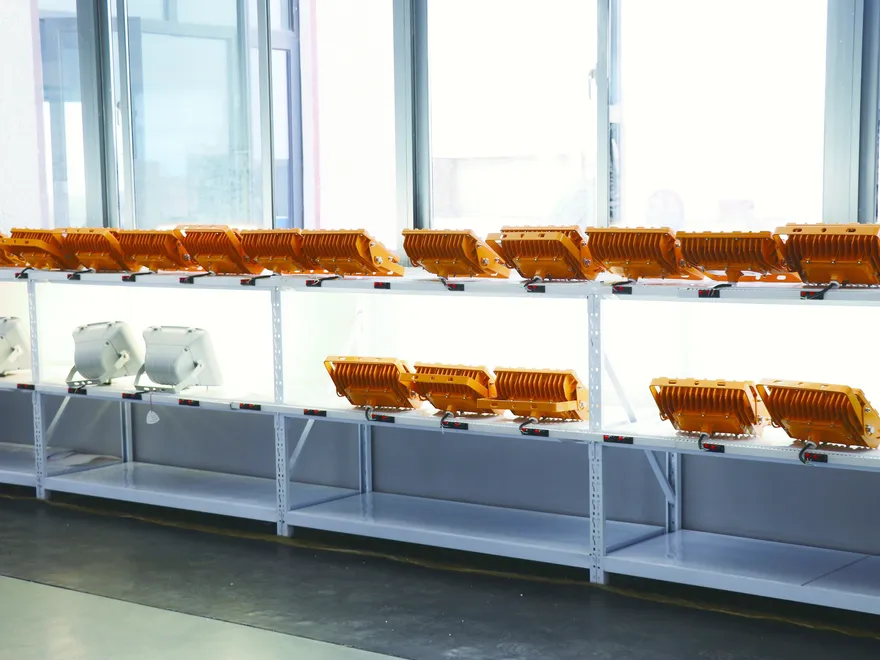
Electronics follow a “bathtub curve”: most failures happen either very early in life or very late. Burn-in exists to spend the early-failure period on our racks instead of on your ceiling. Assembled fixtures run at full power for hours — drivers under real load, boards at real temperature — and anything with a marginal joint, a weak driver, or a wiring fault reveals itself before packing.
This is the stage most often skipped by low-cost assemblers, because it costs floor space, energy and time while adding nothing visible to the product. It is also the cheapest insurance a buyer can demand. Ask any supplier two questions: how long is your burn-in, and at what load? A confident factory answers immediately.
Stage 7 — Final Inspection and Photometric Verification
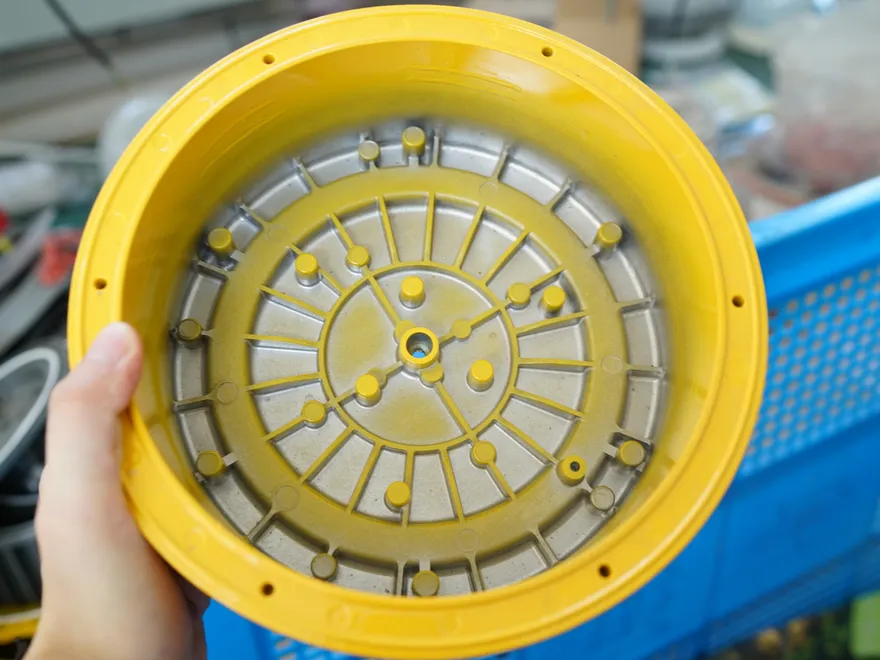
Before packing, finished fixtures are inspected against the order specification: lumen output and efficacy sampled in the integrating sphere, color temperature and CRI verified, electrical parameters logged, and cosmetics checked under bright light. Batch sampling follows standard AQL practice, and for project orders buyers can commission a third-party pre-shipment inspection — a manufacturer with nothing to hide will welcome it.
This is also where the paperwork is assembled: LM-79 photometric reports, LM-80/TM-21 lumen-maintenance backing, and the certificates the destination market requires — the details of which we cover in our CE Declaration of Conformity guide.
Stage 8 — Packing and Shipment
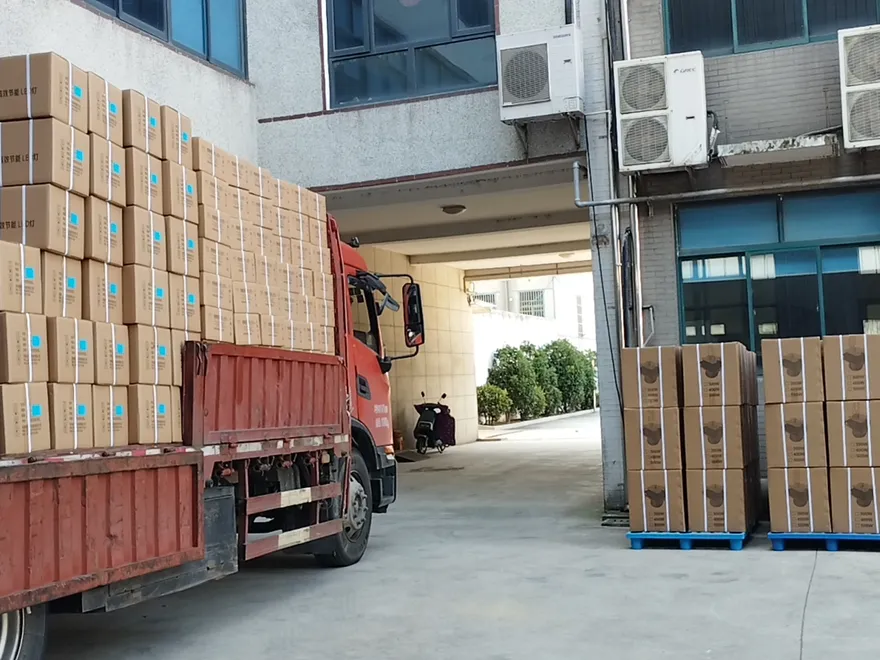
A fixture that survives seven stages can still die in a container. Export packing is engineered, not decorative: foam or molded-pulp cradles sized to the fixture, cartons rated for stacking height, desiccant against container humidity, and pallet plans that match the container’s dimensions so cargo cannot shift. Carton markings carry the order codes and handling symbols customs and warehouses expect. For OEM orders, this is also where custom-branded packaging enters the chain — one detail among many covered on our custom OEM/ODM services page.
What This Means When You Choose a Supplier
The eight stages are a checklist you can use on any factory, including ours:
| Stage | What to ask for |
|---|---|
| 1. Incoming QC | IQC records; chip brand and bin codes on the order |
| 2. SMT | Own line or outsourced? Solder-paste and optical inspection data |
| 3. Die-casting | Own casting or bought housings? Mold maintenance practice |
| 4. Surface treatment | Salt-spray test results; fastener material spec |
| 5. Assembly | Hi-pot / ground continuity test records per fixture |
| 6. Aging | Burn-in duration and load — a number, not a “yes” |
| 7. Final inspection | LM-79 report for your SKU; third-party PSI accepted? |
| 8. Packing | Drop-test practice; carton and pallet plan for your order |
A trading company can answer perhaps two of these eight rows. A real manufacturer answers all of them — and offers the factory tour, physical or video, to prove it. Ours is open: tell us what you are sourcing and we will walk you through every stage above on a live call, with your product on the line.
Frequently Asked Questions
How long does LED light manufacturing take from order to shipment? For standard configurations, 15–25 days from confirmed order to ex-factory; OEM/ODM orders with custom optics, housings or branding typically run 30–45 days after sample approval. The variable is rarely the assembly itself — it is upstream material lead times and the sampling loop.
What is the most important stage for fixture lifespan? SMT and thermal assembly. The solder joint under the chip and the contact between board and housing define junction temperature, and junction temperature drives lumen depreciation and driver stress. Aging (stage 6) then catches the units where something in that chain went wrong.
How can I verify a supplier actually runs these stages and isn’t a trading company? Ask for stage-specific evidence — IQC records, reflow profiles, burn-in logs — and request a live video walk of the line with your order in production. Traders can show a showroom; they cannot show solder-paste inspection data on demand.
Do all Sunjoylight products go through burn-in aging? Yes — assembled fixtures run at full power on aging racks before final inspection, across all product families. Duration and sampling depth scale with the product type and order requirements, and aging logs can be included in your shipment documentation on request.
Can I get the manufacturing process documented for my project file? Yes. Project and OEM orders can include the QC documentation pack: IQC summary, safety-test records, LM-79 photometric report, LM-80/TM-21 backing, and — for explosion-proof SJFB fixtures — the GB/T 3836 certificate (ZJEx25.1185). See what is available on our products pages or request the pack with your quotation.
The Bottom Line
An LED fixture is a thermal and mechanical system disguised as an electrical product, and its quality is decided in sequence: honest components in, sound solder under the chip, a casting that carries heat, a coating that resists the site atmosphere, disciplined assembly, burn-in that filters early failures, measured verification, and packing that survives the voyage. Use the eight stages as your audit script — on us or on anyone else — and the datasheets you compare will finally mean what they say.