Light the Road, Not the Sky
Highways, urban streets and unlit rural routes each need a different fixture and optic. Our street range — designed against EN 13201 — plus all-in-one solar lights cover the network, with the right distribution for every road class.
The Road Class Decides the Fixture
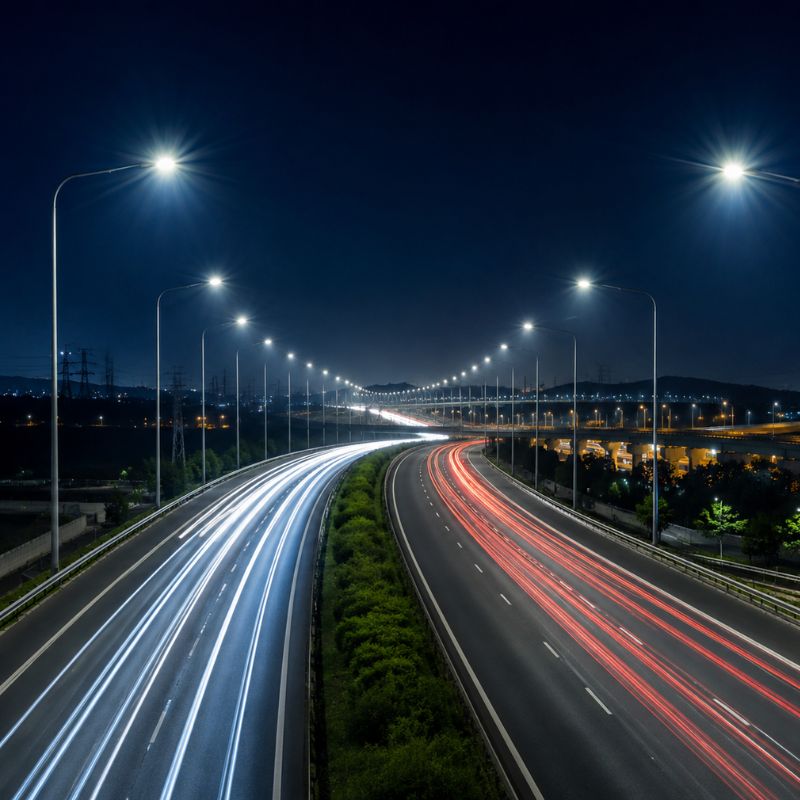
Roadway lighting is matched to the road: a motorway, a city street and a residential lane have different speed, traffic and lighting classes under EN 13201. The right optic puts light on the carriageway with good uniformity and little spill or sky-glow, while the pole spacing keeps it even between luminaires.
Type II / III / V distributions match the fixture to the road width and pole layout.
Optic and mounting height set how far poles can sit apart while staying uniform.
All-in-one solar street lights cover rural and unlit routes with no trenching.
Match the Fixture to the Road Class
A starting point keyed to EN 13201 classes. We confirm with a roadway photometric study for your geometry.
| Class (EN 13201) | Typical Road | Suggested Fixture | Mounting |
|---|---|---|---|
| M1 – M2 | Highways & trunk roads | Street 150–240W, Type II/III optic | 10–12 m pole |
| M3 – M4 | Distributor & urban roads | Street 60–120W | 8–10 m pole |
| M5 / P-class | Residential, paths & parks | Street 30–60W or solar | 4–8 m pole |
| Off-grid | Rural & unlit routes | All-in-one solar street | 6–10 m pole |
* Design reference to EN 13201 classes. We supply IES/LDT files and a roadway study (e.g. DIALux) for your exact geometry.
Across the Network
Urban Distributor Road
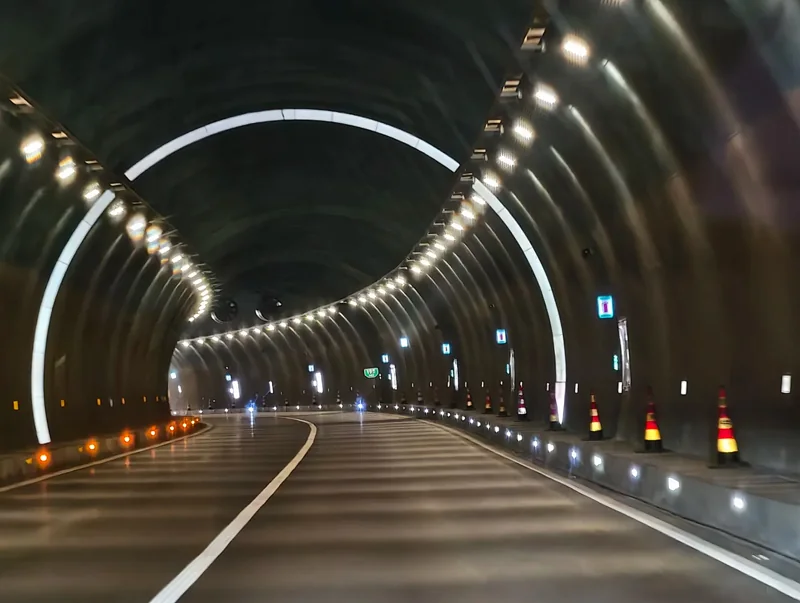
City roads need even carriageway lighting with good uniformity and minimal spill into adjacent homes.
Select the roadway optic (Type II/III) for the lane width and confirm pole spacing in a photometric study so light stays even between poles.
Off-Grid Rural Route
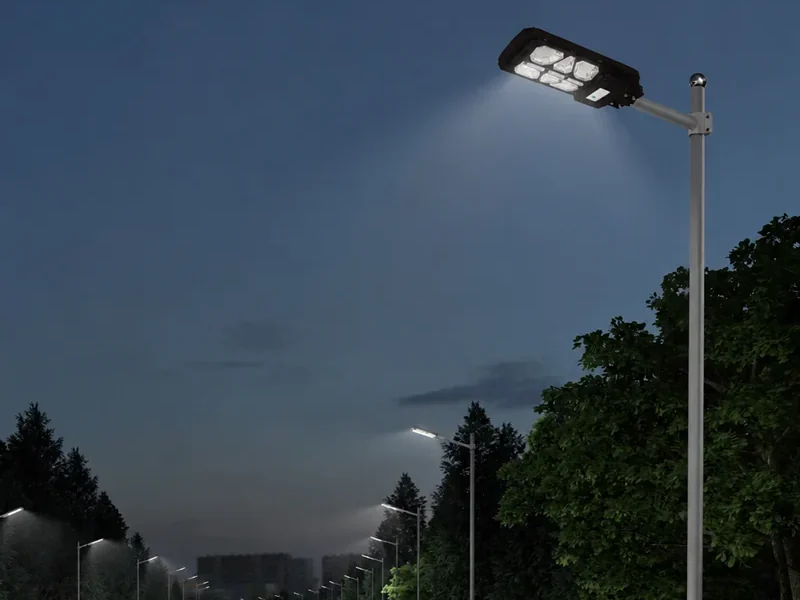
Rural and unlit stretches are far from the grid, where trenching a cable is slow and costly.
Deploy all-in-one solar street lights sized to the required nightly run-time, mounted on poles with no cabling or metered supply.
The Whole Network, One Supplier
The Right Optic for the Road
Type II / III / V roadway distributions matched to road width, pole height and EN 13201 class.
Learn more →Off-Grid Solar Option
All-in-one solar street lights for rural and unlit routes — no trenching, no electricity bill.
Learn more →Roadway Photometric Design
IES/LDT files and a roadway study confirm uniformity and pole spacing for your geometry.
Municipal Project Supply
CE documentation and photometric files supplied for tenders and large municipal rollouts.
Learn more →The Roadway Core Range
LED Street Lights
Cobra head · roadway · municipal & highway lighting
Solar LED Lights
All-in-one solar street lights · off-grid · solar flood lights
LED Flood Lights
Stadium flood lights · outdoor flood lighting · industrial yard illumination
Roadway Lighting Lighting — Answered
What standard do you design roadway lighting to?
EN 13201 is the common design reference for road lighting. It sets lighting classes (M-classes for traffic routes, P-classes for pedestrian areas) with target luminance/illuminance and uniformity. We select the optic and pole spacing to meet the class and supply IES/LDT files and a roadway study for verification.
How far apart can the poles be?
Pole spacing depends on the optic, mounting height and the lighting class you need to hold. A narrower roadway optic and higher mounting allow wider spacing while keeping uniformity. We confirm the spacing for your road in a photometric study.
Do you offer solar street lighting for off-grid roads?
Yes. Our all-in-one solar street range mounts on a pole with no trenching or grid connection, sized to the nightly run-time you need. It suits rural routes, new developments and stretches where running a mains cable is impractical.
Can you support municipal tenders and large rollouts?
Yes. As a direct manufacturer we supply CE documentation, photometric files and consistent product across large quantities, with FOB / CIF / DDP logistics for municipal and highway projects.
What is the difference between Type II, III and V optics?
They describe how the fixture spreads light over the road. Type II throws a long, narrow oval for narrower roads with poles close to the edge; Type III pushes light further across for wider carriageways; Type V distributes symmetrically in all directions, suiting central poles in plazas, intersections and parking areas. Choosing the optic to match road width and pole setback is what lets poles sit further apart while holding EN 13201 uniformity.
Do your street lights support photocells and smart-city controls?
Yes. Street fixtures can be configured with NEMA 7-pin or Zhaga Book 18 receptacles and dimmable (0-10V / DALI) drivers as part of the OEM specification, so a network can start with simple dusk-to-dawn photocells and later twist on smart controllers - metering, midnight dimming, fault reporting - without changing the luminaire. Tell us which control ecosystem the tender names and we configure the socket and driver to match.
Related Public-Realm Sectors

Tell us about your project.
Get a quote within 24 hours.
Share your application — environment, requirements, quantity. A real engineer responds with a tailored quote, IES files, and timeline within one business day.